


 English
  Français
  Tiếng Việt
  Italiano
  Nederlands
  Türkçe
  Svenska
  Polski
  Română
  Latviešu
  한국어
한국어  Русский
  Español
  Deutsch
  Українська
  Português
  العربية
  Indonesian
  Čeština
  Suomi
Suomi  Eesti
Eesti  Български
  Dansk
Dansk  Lietuvių
  Bokmål
  Slovenčina
  Slovenščina
  Ελληνικά
  Magyar
  עברית
עברית 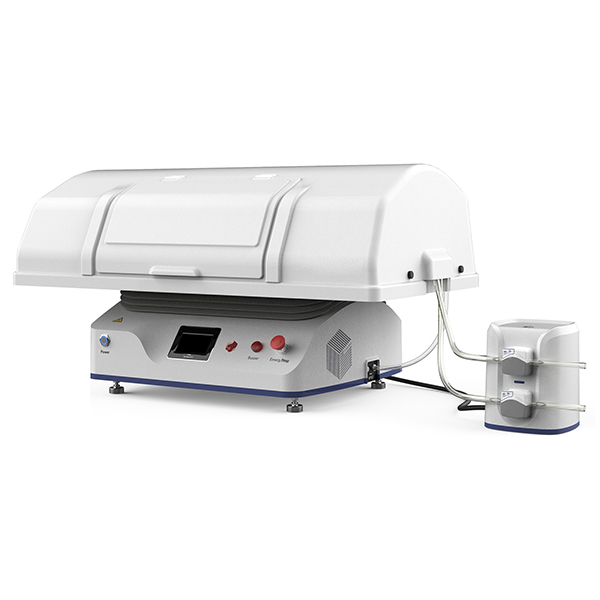
wave bioreactor for continuous cell perfusion culture
The wave bioreactor is a highly efficient cell culture system that uses wave oscillations for mixing and oxygen dissolution to promote cell growth by providing a uniform culture environment.
Description
Wave Bioreactor Overview
With a working volume up to 25L, the wave bioreactor is widely used in life science research, seed tank culture and production in the biopharmaceutical field, providing an efficient, safe and low-cost solution for cell culture.
Features
- Excellent culture performance: the wave bioreactor carries out gas mass transfer by wave oscillation, eliminating the need for traditional bubble aeration system and avoiding cell damage and the use of defoamer. The oscillating wave motion improves the dissolved oxygen efficiency, which helps to improve the cell state and significantly increase the cell density and yield, suitable for high-density cell culture.
- Platform versatility: The reactor is suitable for a variety of cell culture modes, including suspension cell culture and sheet carrier culture, and has good compatibility with commonly used mammalian cells such as CHO cells, HEK293 cells and insect cells such as Sf9. It supports a variety of process modes, such as batch culture, flow-addition culture and perfusion culture, to meet the needs of different cell cultures.
- Flexible configuration and convenient operation: The wave bioreactor is compatible with different sizes of reaction bags, which helps to reduce the cost of hardware investment, and at the same time reduces the transfer of containers and reduces the risk of cross-contamination. The disposable reaction bag design avoids the cleaning and sterilization process of traditional reactors, thus saving a lot of working time and ensuring a pollution-free culture environment.
- Precise and reliable control system: the reactor is equipped with a precise swing angle and speed control system, which can precisely adjust the swinging amplitude and speed of the reactor to meet the needs of different cell cultures. Combined with pH and dissolved oxygen sensors, it can monitor key process parameters in real time to ensure good conditions during the culture process and optimize cell growth and production efficiency.
- Intelligent process automation: Equipped with automated control software system can monitor and adjust various parameters in the culture process in real time to ensure that the culture conditions at each stage are well controlled, reduce the deviation of human operation and improve the accuracy and safety of operation.
Working Principle
The core working principle of the Wave Bioreactor is to provide gas-liquid mixing and oxygen dissolution through a wave-like oscillating motion. The wave motion inside the reactor pushes the culture liquid up and down, allowing the gas to be more evenly distributed in the liquid, thus increasing oxygen solubility and cell growth efficiency. The use of wave motion to increase the gas-liquid contact area avoids the shear stress damage to cells that may be caused by traditional bubble aeration. The frequency, angle and rotational speed of the oscillation can be precisely adjusted according to different cellular needs, ensuring cell growth during the culture process.
In addition, the reactor is equipped with pH and DO sensors to monitor and regulate important growth conditions in real time during cell culture, including pH and oxygen concentration, thus ensuring stable cell growth. Due to the use of disposable wave reaction bags, the contamination and cleaning work inside the vessel is reduced, which lowers the operation complexity and production cost.
Application Areas
- Monoclonal antibody production: wave bioreactors are widely used in the monoclonal antibody production process, which can effectively improve the cell growth rate and antibody yield, and are suitable for large-scale production needs.
- Vaccine production: It is suitable for different kinds of vaccine production, through optimizing the cell growth environment and improving the production efficiency, it shows excellent performance in the production of viral or protein vaccines.
- Cell and gene therapy: Wave reactors have been widely used in the field of cell therapy and gene therapy. By culturing various types of cells, such as T cells, stem cells, etc., it can provide a large number of cell resources needed for clinical treatment.
- Mammalian cell suspension culture: For mammalian cells such as CHO cells, HEK293 cells, etc., wave bioreactors can provide an efficient culture environment to ensure high-density cell growth and high yield.
- Insect cell culture: In the culture of insect cells, Sf9 cells, the wave bioreactor also shows excellent adaptability and is widely used in viral expression systems and protein production.
- Suspension cell batch and replenishment batch culture: It can support suspension cell batch culture and replenishment batch culture to ensure that the cells receive sufficient nutrient supply and oxygen during the culture process to maintain their efficient growth.
- Adherent cell sheet carrier culture: For adherent cells such as Vero, the wave reactor is able to promote cell attachment and growth through a special wave motion, which is suitable for applications such as vaccine production.