


 English
  Français
  Tiếng Việt
  Italiano
  Nederlands
  Türkçe
  Svenska
  Polski
  Română
  Latviešu
  한국어
한국어  Русский
  Español
  Deutsch
  Українська
  Português
  العربية
  Indonesian
  Čeština
  Suomi
Suomi  Eesti
Eesti  Български
  Dansk
Dansk  Lietuvių
  Bokmål
  Slovenčina
  Slovenščina
  Ελληνικά
  Magyar
  עברית
עברית 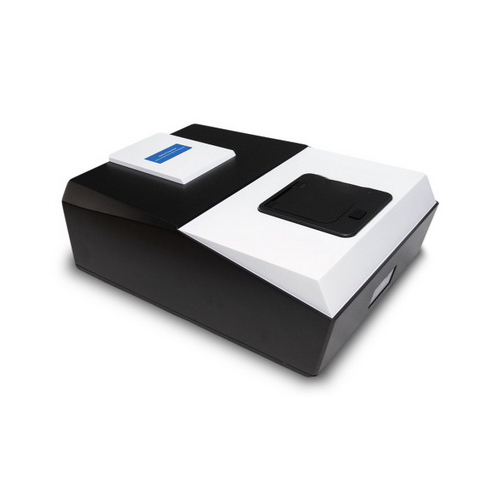
nano particle size and zeta potential analyzer for research
Nano particle size and Z potential analyzer is a combination of dynamic light scattering and electrophoretic light scattering technology of high-precision analytical equipment, able to simultaneously measure the particle size distribution of nanoparticles and surface electrical properties, Zeta potential.
Description
Nano Particle Size and Zeta Potential Analyzer
Nano Particle Size and Zeta Potential Analyzer is widely used in the fields of material science, pharmaceutical, biotechnology, food, chemical, etc. It is an important tool to study colloid stability, surface modification of nanomaterials and electrical properties of dispersed systems.
Main Features
- Dual analytical capability: Particle size and zeta potential can be tested simultaneously to comprehensively evaluate the physical and chemical properties of particles.
- High sensitivity detection: The use of high-performance photomultiplier tubes to ensure that even weak signals can be accurately captured, high signal-to-noise ratio.
- Precise temperature control system: Semiconductor thermostat control, precision up to 0.1 ℃, effectively eliminate the interference of temperature on the test results.
- Stable optical circuit design: Optical frequency shifting and fiber optic coupling, compact size, strong anti-interference ability, to protect the stability of the test.
- Ultra-high-speed data processing: Built-in high-performance digital correlator, real-time acquisition and data operation, to enhance test efficiency and accuracy.
Advantages
- One machine for multiple uses, saving experimental costs and space.
- Fast testing speed, high reproducibility of results.
- Can analyze nanoscale particles, to meet the needs of high-end scientific research or industrial production.
- Adaptable, can test different types and concentrations of samples.
- Support automation and batch testing, suitable for high-throughput analysis.
Working Principle
The analyzer uses dynamic light scattering technology to irradiate nanoparticles dispersed in liquid with laser light, analyze the intensity change of scattered light due to Brownian motion, and then calculate the particle size distribution. zeta potential measurement is based on the principle of electrophoretic light scattering, which is based on the electrophoretic light scattering principle, whereby the particles move electrophoretically under the effect of electric field, and then the laser irradiation generates a Doppler shift, and then analyze the shift amount to obtain the particle size distribution through photon correlation spectroscopy technology. The zeta potential of the particles can be obtained by analyzing the frequency shift. The core data acquisition relies on a high-speed digital correlator to ensure accurate processing of electrophoresis and light scattering signals. The precise temperature control system ensures constant temperature throughout the test process, eliminating external influences and improving data stability.
Application Areas
- Nanomaterials characterization: analyze particle size distribution and surface electrical properties, to guide the development of materials and performance optimization.
- Drug formulation development: testing the stability and dispersion of drug carriers, such as liposomes, nanoparticles, microemulsions and so on.
- Biomedicine: Study the size and surface charge characteristics of biological particles such as proteins, viruses, extracellular vesicles, etc.
- Food and Chemical: Evaluate the stability of emulsions, suspensions, colloids and other systems.
- Environmental monitoring: analyze the dispersion state and electrical properties of particles in the water body to help pollutant management.
- Scientific research and education: as a standard instrument for particle size and zeta potential analysis experiments in colleges and research institutions.
Technical Parameters
| Model | LP20 | |
|---|---|---|
| Implementation standards | GB/T 19627-2005/ISO 13321:1996; GB/T 29022-2012/ISO 22412:2008 | |
| Measurement Range | 1nm to 10000nm | -500mV to +500mV |
| Concentration range | 0.1mg/ml to 100mg/ml, sample-related | |
| Electrophoretic mobility range | more than ±20 um·cm/V·s | |
| Conductivity | ≤ 200 mS/cm, depends on the sample | |
| Accuracy error | less than 1% | less than 15% |
| Repeatability error | less than 1% | less than 15% |
| Laser light source | Semiconductor laser, λ = 635 nm, P = 1 to 40 mW, adjustable | |
| Detector | Photomultiplier Tube, PMT | |
| Scattering angle | 90 degrees | 18 degrees |
| Sample cell volume | 10mmx10mmx40mm, 1mL to 4mL | 10mmx10mmx60mm, 1mL |
| Temperature control range | 5°C to 45°C | |
| Temperature control accuracy | ±0.1°C | |
| Measurement speed | less than 5 minutes | |
| Dimensions | 560mmx450mmx300mm | |
| Weight | 20kg | |
| Power Supply | 100Vac, 230Vac, 50Hz, 60Hz | |