


 English
  Français
  Tiếng Việt
  Italiano
  Nederlands
  Türkçe
  Svenska
  Polski
  Română
  Latviešu
  한국어
한국어  Русский
  Español
  Deutsch
  Українська
  Português
  العربية
  Indonesian
  Čeština
  Suomi
Suomi  Eesti
Eesti  Български
  Dansk
Dansk  Lietuvių
  Bokmål
  Slovenčina
  Slovenščina
  Ελληνικά
  Magyar
  עברית
עברית 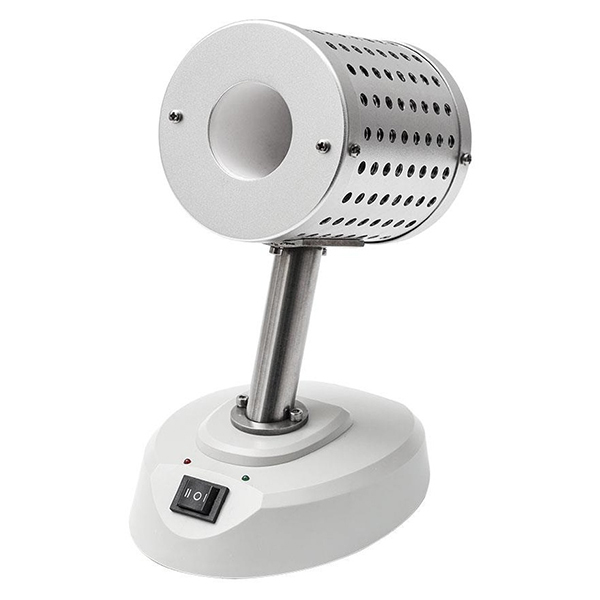
bacti-cinerator suitable for use in biosafety cabinets
Bacti-cinerator is a high-temperature dry heat sterilization equipment designed for laboratory and field operation environment, mainly used for inoculation rings, inoculation needles and other small metal utensils for rapid and reliable sterilization treatment.
Description
Bacti-cinerator adopts infrared ceramic heating technology to achieve high temperature sterilization without the help of open flame, which is a modern microbiology experiment to replace the traditional alcohol lamp.
Main Features of Bacti-cinerator
- high temperature sterilization efficiency: built-in infrared heating element, can quickly warm up to more than 800 °C, in 5 to 7 seconds to complete the sterilization process.
- ready to use: no need to preheat, power immediately available, suitable for frequent operation.
- high safety: no open flame, no gas volatilization, to avoid fire and laboratory smoke pollution and other safety hazards.
- strong portability: compact body design, suitable for biosafety cabinets, clean bench, mobile vehicles and field research environment.
- a wide range of applications: support for sterilization instruments with a diameter of 35mm, the total length of the heating area up to 100mm, to adapt to a variety of inoculation tools.
- solid structure, long service life: the use of high-quality stainless steel materials and high-performance ceramic heating body, easy maintenance, durable.
Technical Advantages of Bacti-cinerator
- alternative to the traditional alcohol lamp: no flammable liquid is needed, eliminating the inconvenience and danger brought by the traditional open-flame operation.
- energy saving and environmental protection: low power consumption, heat concentration, in line with the concept of green laboratory.
- rapid sterilization: suitable for high-frequency operations, such as high-throughput strain screening, batch inoculation and other experimental processes.
Working Principle
Bacti-cinerator adopts infrared ceramic heating principle, which conducts heat directly to the surface of metal utensils through the heating tube to rapidly inactivate bacteria, viruses and their spores. Compared with alcohol lamp or open flame, infrared sterilization can precisely control the heating area and temperature, avoiding local overheating or incomplete sterilization.
Application Areas
- Microbiology laboratory strain isolation, culture.
- Medical schools and scientific research units.
- Food, drug and water quality testing laboratory.
- Field testing or mobile laboratory vehicle.
- Field sampling and immediate analysis of the scene.
Technical Parameters
| Model | NT10B |
|---|---|
| Maximum Temperature at Center Zone | 825°C±25°C |
| Maximum Diameter of Sterilized Item | diameter 35mm |
| Total Length of Heating Zone | 100mm |
| Heating Time | 15 minutes |
| Fuse | 250Vac, 3A, 5x20mm |
| Dimensions | 130x120x200mm |
| Weight | 1.3kg |
| Power Supply | 230Vac, 50Hz-60Hz, 250W |