


 English
  Français
  Tiếng Việt
  Italiano
  Nederlands
  Türkçe
  Svenska
  Polski
  Română
  Latviešu
  한국어
한국어  Русский
  Español
  Deutsch
  Українська
  Português
  العربية
  Indonesian
  Čeština
  Suomi
Suomi  Eesti
Eesti  Български
  Dansk
Dansk  Lietuvių
  Bokmål
  Slovenčina
  Slovenščina
  Ελληνικά
  Magyar
  עברית
עברית 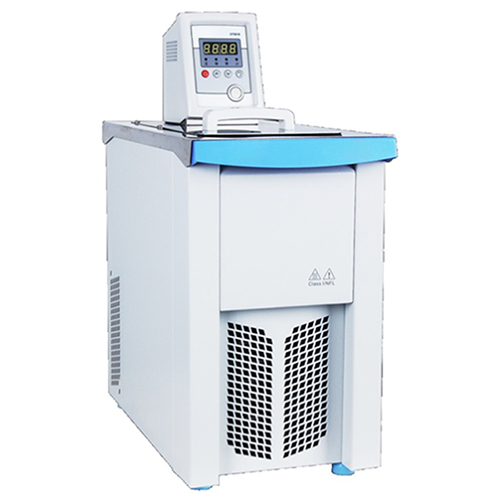
cooling heating circulator bath for petrochemical industry
Cooling heating circulator bath is a kind of high-precision temperature control equipment with both heating and cooling functions, which is suitable for scientific research experiments, process development and industrial processes with high requirements for temperature change control.
Description
Cooling Heating Circulating Bath
Cooling heating circulating baths simultaneously support internal immersion thermostat and external circulating heat exchange, widely used in all kinds of temperature-sensitive sample processing, system cooling/heating, reaction control and other processes, is the true sense of cooling and heating dual-control platform.
Features of Cooling Heating Circulating Bath
- Cooling and heating dual function in one: a device can both cooling and heating, without the need to configure multiple devices, saving laboratory space and cost.
- One machine dual-use design: compatible with the immersion bath temperature control and external equipment circulation temperature control, adaptability.
- Dynamic and accurate thermostat system: equipped with high-speed response PID temperature control algorithm, high temperature accuracy, suitable for occasions requiring high temperature stability.
- Intelligent start-up mode: with automatic recovery function and standby state control of incoming calls, to protect the continuity of operation and equipment safety.
- Clear and intuitive user interface: cold white backlit LCD screen with graphical status indication, at a glance, intuitive operation.
- Optimized refrigeration path design: through the optimization of the calculation of the cooling capacity and temperature points, to achieve higher energy efficiency and rapid cooling.
- A variety of expansion interfaces: optional external temperature sensor, communication interface (RS232/RS485), data acquisition software and a variety of heat transfer piping and media.
- International power standards support: can be adapted to a variety of regional power grids, national standards, European standards, American standards, etc., to meet the needs of users around the world.
- Multiple certification guarantee: through CE, UL and other international standards testing to ensure compliance with electrical safety and electromagnetic compatibility.
Advantages
- Energy saving and high efficiency: combining hot and cold functions with precise temperature control logic to realize small energy consumption.
- Safe and reliable: the system comes with over-temperature protection, sensor failure alarm, anti-dry burning, overcurrent prevention, pump blocking protection and other mechanisms to effectively prevent equipment damage and experimental accidents.
- High flexibility of expansion: external sensors can be realized on the reaction vessel body or remote system temperature control, to achieve closed-loop control accuracy.
- Support for remote communication and automation integration: with RS interface and control software, it can be incorporated into automation platform or experiment management system for remote monitoring and data tracing.
Working Principle
The cooling heating circulator bath has an internal integrated heating module, compressor refrigeration system and liquid circulation pump. During operation, according to the set temperature, the system collects data in real time through temperature sensors, and the thermostat issues commands to regulate the working status of the heater or refrigeration unit. Liquid media, such as glycol mixture, water or silicone oil, driven by the circulation pump, flow continuously inside the bath or through the external circulation line, transferring heat to the sample or external equipment, thus realizing the control of heating up or cooling down of the target object.
Application Areas
- Chemical synthesis and reaction control: for thermostatic control of reaction kettle, titrator, reflux system to ensure controllable reaction rate and good repeatability.
- Pharmaceutical and biological research: for drug dissolution, biological sample culture, enzyme reaction, etc. to provide a stable temperature environment.
- Semiconductor and material processing: for photoresist development, encapsulation cooling process to provide accurate thermal management.
- Physical properties testing: suitable for the determination of viscosity, density, thermal expansion, thermal conductivity and other heat-related parameters of the experiment.
- Quality control and instrumentation: with rotary evaporator, rheometer, mass spectrometer and other equipment to form a complete temperature control experimental system.
Technical Parameters
| Model | HC20 | HC20H | HC30 | HC30H |
|---|---|---|---|---|
| Temperature range | -28°C to +95°C | -28°C to +200°C | -28°C to +95°C | -28°C to +200°C |
| Temperature resolution | 0.01°C | |||
| Temperature accuracy | ±0.05°C | ±0.1°C | ±0.05°C | ±0.1°C |
| Temperature uniformity | ±0.1°C | |||
| Heating power | 1500W | |||
| refrigeration power at 20°C | 250W | 250W | 350W | 350W |
| refrigeration power at 0°C | 175W | 175W | 275W | 275W |
| refrigeration power at -20°C | 50W | 50W | 75W | 75W |
| Circulation pump pressure | 300mbar | |||
| Circulation pump flow rate | 12L/min | |||
| Volume | 9.5L | 9.5L | 16.8L | 16.8L |
| Internal dimensions | 170Wx350Dx160H mm | 300Wx350Dx160H mm | ||
| Bath opening size | 170Wx180D mm | 300Wx180D mm | ||
| External Dimension | 260Wx505Dx610H mm | 390Wx505Dx610H mm | ||
| Power suppy | 230Vac, 50Hz | |||