


 English
  Français
  Tiếng Việt
  Italiano
  Nederlands
  Türkçe
  Svenska
  Polski
  Română
  Latviešu
  한국어
한국어  Русский
  Español
  Deutsch
  Українська
  Português
  العربية
  Indonesian
  Čeština
  Suomi
Suomi  Eesti
Eesti  Български
  Dansk
Dansk  Lietuvių
  Bokmål
  Slovenčina
  Slovenščina
  Ελληνικά
  Magyar
  עברית
עברית 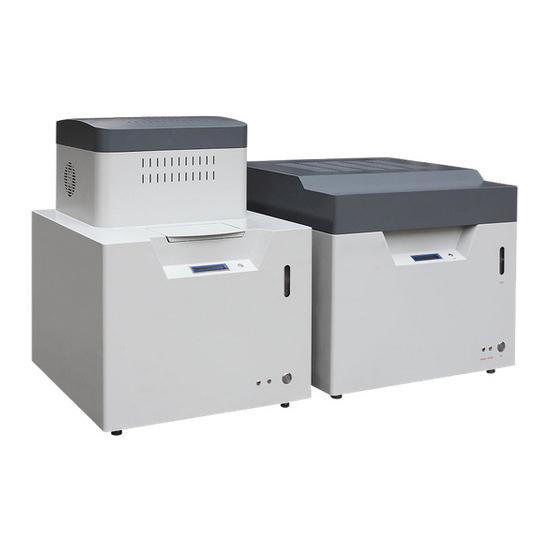
fully automatic proximate analyzer for power plants
Fully automatic proximate analyzer is a thermogravimetric analysis equipment integrating intelligence, automation and high precision, which is specially used for quantitative determination of moisture, ash, volatile matter and other basic components of solid fuel samples, such as coal, coke, biomass fuel and petroleum coke.
Description
Fully automatic proximate analyzers run without human intervention, widely used in energy quality control, calorific value assessment and scientific research analysis.
Main Features of the Fully Automatic Proximate Analyzer
- fully automatic operation: with automatic weighing, automatic sample delivery, automatic testing, automatic data processing, report generation and printing and other full-process functions, to achieve 24-hour unattended operation.
- modular control system: built-in micro-control unit and balance display module, real-time monitoring of the operating status and automatically record key data, support offline operation.
- dual furnace and dual balance design: can simultaneously or independently complete a number of indicators of different samples testing, flexible and efficient, support for batch continuous operation.
- Intelligent power failure recovery: with power failure memory and recovery function, can be renewed in the same place after accidental power failure in the middle of the test, data will not be lost.
- environmentally friendly design: the use of multi-point distributed fume exhaust port, effectively capturing and eliminating smoke and dust, reducing laboratory pollution.
- precision temperature control system: the use of PID intelligent algorithm to control the temperature, the heating curve is stable, the accuracy is as high as ± 1 °C.
- automatic protection mechanism: flip cover, heat insulation design can effectively avoid the operator to suffer high temperature radiation or accidental scalding.
Main Advantages
- in line with and better than the national standards: moisture, ash and volatile matter test results are highly stable and repeatable, some indicators are better than the requirements of national standards such as GB|T 212.
- zero gas dependence: equipment without external gas piping, reducing installation and maintenance costs.
- data traceability and integrated management: access to the laboratory information management system (LIMS), to achieve automatic data upload, backup and paperless management, to ensure that the whole process of testing can be traced.
- stability and fault self-diagnosis: built-in self-test module, power on that completes the system self-test, improve system reliability and operation and maintenance efficiency.
Working Principle
Fully automatic proximate analyzer is based on the principle of thermogravimetric analysis, through the real-time monitoring of the quality change of the sample at different temperatures, so as to obtain the pyrolysis characteristics of its components. Specifically include:
- moisture determination: the sample is heated and dried at 105°C, and the weight loss is measured as moisture.
- ash determination: the residue after complete combustion at high temperature is the ash.
- volatile fraction determination: heated at high temperature in an oxygen-free or low-oxygen environment, the escaping gas is the volatile component.
- Fixed carbon and calorific value estimation: fixed carbon and theoretical calorific value are calculated by difference and subtraction method and known composition.
- double furnace alternating work can greatly improve the testing efficiency, each furnace can be independent temperature control, to ensure the accuracy and consistency of the test conditions.
Application Areas
- Power industry: for power plant coal quality control, boiler combustion efficiency assessment.
- Coal mine and coal trade: rapid composition analysis of coal samples from factory or trade.
- Environmental protection: analyze the carbon-containing components and harmful residues in solid fuels from pollution sources.
- Petrochemical and metallurgy: analyze the composition of coke, petroleum coke and other industrial materials.
- scientific research and teaching: universities and research institutions for fuel pyrolysis characteristics research and teaching experiments.
- quality inspection agencies and third-party laboratories: to perform standard testing tasks and issue test reports.
Technical Parameters
| Model | AP10A | AP10B | AP10C | AP10D |
|---|---|---|---|---|
| Temperature Control Range | ambient+10°C to 1000°C | |||
| Temperature Control Accuracy | ±2°C | |||
| Test Temperature | Moisture 105°C, Ash 815°C | Volatile Matter 900°C | Moisture 105°C, Loss on Ignition 600°C | Moisture 105°C, Ash 815°C, Volatile Matter 900°C |
| Repeatability | Complies with GB|T 212-2008 and GB|T 30732-2014 standards for instrumental methods of coal proximate analysis | |||
| Accuracy | Within the uncertainty range of standard samples | |||
| Sample Mass | 0.5g to 1.2g | 0.5g to 1.2g | 5 to 20g | 0.5g to 1.2g |
| Number of Samples | 20 samples per batch | 10 samples per batch | 20 samples per batch | |
| Test Time | Classical method: 20 samples require 180 minutes, Rapid method: 20 samples require 100 minutes | 20 samples require 100 minutes | 10 samples require 240 minutes | |
| Automatic Sample Feeding | yes | |||
| MCPC Module | yes | |||
| Built-in Balance | yes | |||
| Balance Display Module | yes | |||
| External Dimensions | 630x560x580mm | 560x560x750mm | 630x560x580mm | 630x560x580mm |
| Power supply | 220Vac, 50Hz | |||
| Weight | 90kg | 80kg | 90kg | 90kg |