


 English
  Français
  Tiếng Việt
  Italiano
  Nederlands
  Türkçe
  Svenska
  Polski
  Română
  Latviešu
  한국어
한국어  Русский
  Español
  Deutsch
  Українська
  Português
  العربية
  Indonesian
  Čeština
  Suomi
Suomi  Eesti
Eesti  Български
  Dansk
Dansk  Lietuvių
  Bokmål
  Slovenčina
  Slovenščina
  Ελληνικά
  Magyar
  עברית
עברית 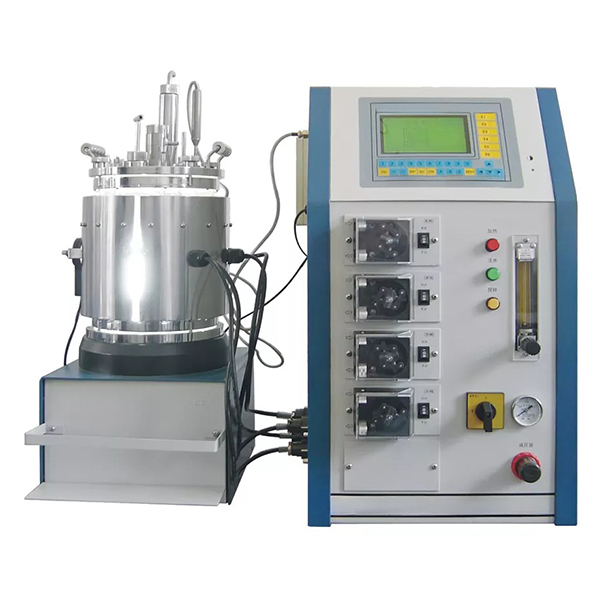
glass photobioreactor for photosynthetic cell culture
Glass photobioreactors are used to simulate the growth conditions of photosynthesis, photosynthesizing bacteria and algae, and are suitable for photosynthesis-related research, green chemistry and bioproducts production.
Description
Glass Photobioreactor Overview
The glass photobioreactor is equipped with a number of control functions such as temperature, agitation, dissolved oxygen, pH, replenishment, light intensity, etc., which can be used for the cultivation of a variety of microorganisms or plant cells in a stable and adjustable environment.
The glass photobioreactor tank is made of high-strength silicon boron glass with high temperature and corrosion resistance, and the inner and outer surfaces are mirror-polished, which can effectively prevent contamination and provide clear observation of the material. In addition, the glass photobioreactor is designed with internal and external light sources, which can adjust the wavelength and intensity of the light according to the need to adapt to the requirements of different photosynthetic processes.
Lighting Device
- Adopt external cover type or internal embedded light source to provide uniform light effect.
- Light source color, wavelength and intensity can be customized according to the experimental requirements in order to provide photosynthesis conditions for microorganisms or plant cells.
- Suitable for biological reaction research on photosynthesis of algae, microorganisms and plant cells.
Tank Design
- Tank volume range: from 0.5 liters to 15 liters, working volume up to 70%.
- Made of high temperature resistant silicon boron glass to ensure efficient heat transfer and corrosion resistance.
- 316L stainless steel tank cover is equipped with multiple interfaces, such as pH, dissolved oxygen, temperature and other electrode sockets, to ensure real-time monitoring of a number of parameters.
Temperature Control System
- Temperature control range: 20°C to 65°C, to meet the needs of low temperature fermentation and microbial culture.
- Using jacketed water bath electric heating, automatic regulation of fermentation temperature, PID intelligent control to ensure the accuracy of temperature control, precision up to ± 0.2 °C.
Gas Flow and Aeration System
- Adopting imported filter for sterile air filtration, the filtration precision reaches 0.2μm to ensure the sterility of the cultivation process.
- Equipped with on-line flow meter to adjust the gas flow automatically, the adjustment range is from 0 to 8L/min, adapting to the gas demand under different fermentation conditions.
Dissolved Oxygen and pH Control
- Dissolved Oxygen control is detected by on-line dissolved oxygen electrode, and can be associated with rotational speed, replenishment and other parameters control, measurement accuracy ±3%, resolution is 0.1%.
- pH control using imported electrodes and peristaltic pumps to automatically add acid, alkali, pH can be associated with the replenishment process, the control accuracy of ± 0.02.
Automatic Replenishment and Defoaming Control
- The peristaltic pump system to provide an automatic flow of replenishment and replenishment can be set to replenish the material, such as constant speed, exponential replenishment.
- Automatic PID defoaming control system real-time monitoring of foam, automatically add defoamer to ensure the stability of the fermentation process.
Working Principle
- Optimization of light and growth conditions: The core of the glass photobioreactor lies in its light system, which simulates natural light conditions and provides wavelengths and light intensity suitable for photosynthesis. Algae, microorganisms, etc. carry out photosynthesis through the action of light to produce the required biomass and metabolites. The built-in or external light source can be adjusted according to the needs of the reactants to ensure efficient cell growth.
- Temperature and pH control: Temperature control system through the jacketed water bath for heating and cooling, to ensure that the temperature inside the reactor is maintained within the preset range, to adapt to the growth needs of different microorganisms or algae. pH control system through the detection electrode and peristaltic pump to automatically add acid and alkali, to maintain the appropriate acidity and alkalinity of the culture medium, in order to promote the metabolism of the organisms.
- Oxygen transfer and stirring: Top mechanical stirring or magnetic coupling stirring ensures the uniform mixing of materials in the reactor and promotes the effective transfer of oxygen and nutrients, avoiding dead space or concentration gradient. DO electrode monitors the dissolved oxygen level in real time to ensure that the microorganisms grow in the appropriate oxygen conditions.
- Gas flow and replenishment: Gas flow is automatically adjusted by a precision flow meter to ensure stable oxygen supply and avoid stagnation of culture due to insufficient gas supply. The replenishment system automatically adjusts the amount of replenishment according to the changes of DO and pH to optimize the metabolism and growth rate of microorganisms.
Application Areas
- Bioenergy: For algae biofuel, such as biodiesel production, the photobioreactor can simulate the natural light conditions, improve the growth efficiency of algae, enhance lipid accumulation, and promote the production of biofuel.
- Environmental protection: In wastewater treatment and pollutant degradation, photobioreactors can cultivate photosynthetic bacteria or algae, and achieve the effect of environmental restoration by absorbing harmful substances and converting waste into harmless substances.
- Food and Nutrition: Used to cultivate food yeast, probiotics and other microorganisms to produce natural coloring, vitamins, amino acids, etc. The high efficiency of photosynthesis promotes the rapid growth of microorganisms and the abundance of metabolites.
- Pharmaceuticals and Biological Products: Used for the production of antibiotics, vaccines, enzymes and other biological drugs, photobioreactors provide a controlled environment to promote the large-scale production of microorganisms or cells.
- Green chemistry and metabolic engineering: In the production of natural products, such as natural organic acids, enzymes, antibiotics, etc., photosynthesis is utilized to enhance product yield and promote the development of green chemistry and metabolic engineering.