

 English
  Français
  Tiếng Việt
  Italiano
  Nederlands
  Türkçe
  Svenska
  Polski
  Română
  Latviešu
  한국어
한국어  Русский
  Español
  Deutsch
  Українська
  Português
  العربية
  Indonesian
  Čeština
  Suomi
Suomi  Eesti
Eesti  Български
  Dansk
Dansk  Lietuvių
  Bokmål
  Slovenčina
  Slovenščina
  Ελληνικά
  Magyar
  עברית
עברית 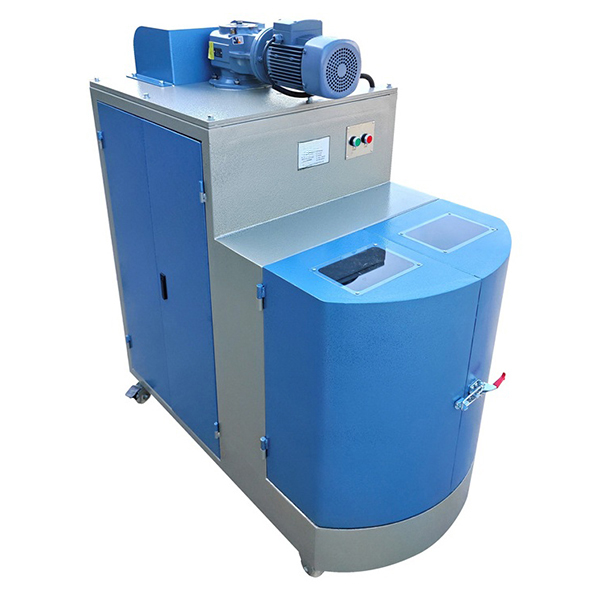
mixing sample divider with bin positioning function
Mixing sample divider is a kind of automated sample making equipment integrating uniform mixing and representative reduction of samples, which is suitable for high-precision processing of powdery or granular materials.
Description
Mixing Sample Divider
This mixing sample divider is designed and manufactured according to many national standards, such as Mechanized Sampling of Coal (GB/T 19494), Method of Preparation of Coal Samples (GB 474), General Rules for Sampling and Sample Preparation of Bulk Mineral Products (GB/T 2007) and so on, which ensures that the samples prepared have good representativeness, consistency and reproducibility.
The mixing sample divider is widely used in the laboratory sampling process of coal, minerals, metallurgy, building materials, electric power, chemical industry, etc. It is also suitable for quality testing, import and export inspection, scientific research and analysis and other scenarios.
Features
- Integrated structure design: set mixing and reduction function in the same body, reduce the loss and error in the sample transfer process.
- Automatic mixing system: mixing time and frequency can be set, through the stirring blade or tumbling mechanism to achieve all-round mixing of samples, to avoid particle size stratification.
- Small belt conveyor: adopts smooth belt feeding system to ensure that the material is fully loose and free of agglomeration before entering the reduction mechanism.
- Rotary reduction mechanism: through the equally spaced arrangement of the sample port rotates at a uniform speed, the sample will be efficiently and uniformly distributed to each sample bucket, the error is less than the standard requirements.
- Safety protection devices: with a mixing bin open cover power protection, anti-misoperation interlocking device, the sampling barrel has a brake function to ensure safe operation.
Advantages
- Strong sample representativeness: mixing and shrinking are completed coherently, which improves the homogeneity of the sample and meets the strict physical and chemical analysis standards.
- High degree of automation: can be configured with timing controller, to achieve the whole process of unmanned operation, suitable for modern laboratories on the efficiency and standardization needs.
- Stable and reliable sampling accuracy: rotary sampling structure with high mechanical accuracy, can be used in high-frequency scenarios to maintain excellent performance for a long time.
- Adapt to a variety of materials: whether coal samples, ores, coke, quartz sand and other materials with different densities and particle sizes can be applied.
- Save manpower, improve efficiency: reduce the labor intensity of the operator, significantly improve the sample processing speed.
Working Principle
- Feeding stage: the original sample is put into the mixing bin by manual or automatic way, and then it is transmitted evenly by the belt conveying system after entering the equipment.
- Mixing stage: the mixing mechanism is activated, the mixing paddle or roller of the sample in the three-dimensional direction of the full mixing, to prevent the material due to different particle size, density and stratification.
- Reduction stage: after mixing, the sample is uniformly sent to the rotating reduction disk. The sample port in the reduction disk distributes the samples into multiple sampling barrels according to the set ratio.
- Sample collection stage: the sample bucket is automatically positioned to facilitate the operator to take samples or continue to the next stage (such as drying, grinding, etc.).
Application Areas
- Coal industry: used for mixing and reduction of raw coal and commercial coal samples to improve the accuracy of test results.
- Mineral metallurgy: precision treatment before sample preparation for iron ore, manganese ore, bauxite, pellet ore, etc.
- Electric power system: sample pretreatment used for fuel coal quality inspection in thermal power plants.
- Third-party testing organizations: used to provide authoritative testing samples to meet the requirements of fairness, accuracy and credibility.
- Scientific research and quality control laboratory: high standard material research, proportioning analysis and process research indispensable tool.
Technical Parameters
| Model | HS450M | HS700M |
|---|---|---|
| Particle size for reduction | ≤3 to 13mm | ≤6 to 25mm |
| Reduction ratio | 1/8 to 1/2(adjustable) | |
| Mixed silo capacity | 35L | 120L |
| Sample bucket capacity | 5.5L | 15L |
| Number of sample buckets | 8 | 8 |
| Production rate | 800kg per hour | |
| Motor power | 0.55kw+0.37kw+0.2kw | 1.5kw+0.37kw+0.2kw |
| Power supply | three phase 380Vac | |
| Weight | 360kg | 450kg |
| Dimensions | 1260x690x1570mm | 1400x820x1650mm |