


 English
  Français
  Tiếng Việt
  Italiano
  Nederlands
  Türkçe
  Svenska
  Polski
  Română
  Latviešu
  한국어
한국어  Русский
  Español
  Deutsch
  Українська
  Português
  العربية
  Indonesian
  Čeština
  Suomi
Suomi  Eesti
Eesti  Български
  Dansk
Dansk  Lietuvių
  Bokmål
  Slovenčina
  Slovenščina
  Ελληνικά
  Magyar
  עברית
עברית 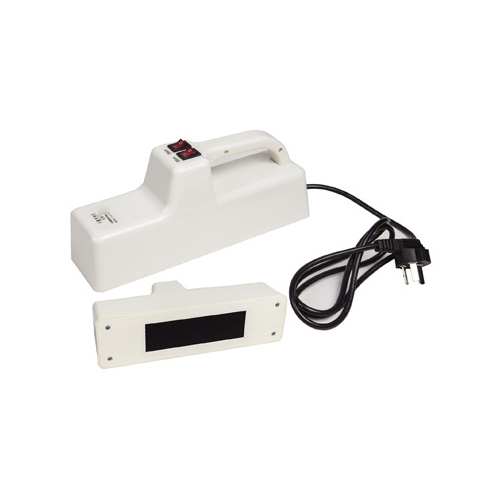
portable handheld uv lamp for dna gel visualization
Portable handheld UV lamp with flexible handheld and mobile observation, support for 254nm and 365nm two commonly used UV wavelengths, to meet the fluorescence excitation needs of different types of nucleic acids or protein gels.
Description
Portable portable UV lamp is easy to operate, lightweight and easy to carry, widely used in laboratories, field sampling and teaching demonstrations to observe electrophoresis results.
Features of Portable Handheld UV Lamp
- lightweight, easy to carry: ergonomic design, light weight, comfortable to hold, convenient for rapid application in the laboratory and field.
- dual-wavelength UV lamp source: integrated 254nm short-wave and 365nm long-wave UV lamps, suitable for different dyes and gel excitation, expanding the scope of application of the experiment.
- ready to use, easy to operate: single-button control, switch sensitive, eliminating the need for complicated setup steps, quickly meet the observation needs.
- High brightness UV light output: stable and uniform UV irradiation ensures that the fluorescent dyes in the gel are fully excited and the bands are clearly visible.
- safety protection design: the lamp head is equipped with a protective cover to minimize UV leakage and reduce the risk of injury to the user’s eyes and skin.
- long-lasting and durable: long lamp life, simple maintenance, to meet the needs of frequent daily use.
Advantages
- portable and flexible, anytime and anywhere observation: not subject to site restrictions, suitable for outdoor field, teaching demonstrations and rapid on-site testing.
- multi-functional excitation wavelength, widely adapted: compatible with a variety of commonly used fluorescent dyes, such as EB, SYBR Green, GelRed, etc., to meet a variety of experimental conditions.
- fast and easy operation: single-key switch design, avoiding complex settings and improving work efficiency.
- Effective safety protection: shield design and reasonable lamp layout to reduce UV radiation leakage, to protect the use of safety.
- economical and practical, low maintenance costs: efficient lamp and energy-saving design, reduce the use and replacement costs.
Working Principle
Portable UV lamps emit specific wavelengths of UV light through the built-in UV lamps to excite the fluorescent dye molecules doped in the nucleic acid electrophoresis gel. When the dye molecules absorb the energy of UV light, they emit fluorescence visible to the naked eye, which makes DNA or protein bands visible. Short-wave UV 254nm is mostly used to excite some special dyes, while long-wave UV 365nm is suitable for most of the fluorescent dyes, which can satisfy a variety of experimental needs. The portable design allows users to flexibly adjust the light angle and distance to realize accurate observation.
Application Areas
- molecular biology experiments: rapid observation of PCR products, electrophoresis DNA/RNA bands.
- Teaching demonstration: molecular biology course demonstration and practical training in colleges and research institutions.
- Field testing: field sampling, environmental sample nucleic acid detection and emergency analysis.
- Clinical testing assistance: genetic diagnosis, pathogen detection and other laboratory aids.
- food safety and environmental monitoring: genetically modified crop detection and microbial nucleic acid detection.
- forensic science: the scene of DNA evidence preliminary screening.
Technical Parameters
| Model | E21 |
|---|---|
| Reflective Area | 200x50mm |
| Reflective UV Light Source Wavelength | 254nm, 365nm |
| Reflective UV Lamp Power | 8W |
| Dimensions | 270x78x110mm |
| Weight | 0.6kg |