


 English
  Français
  Tiếng Việt
  Italiano
  Nederlands
  Türkçe
  Svenska
  Polski
  Română
  Latviešu
  한국어
한국어  Русский
  Español
  Deutsch
  Українська
  Português
  العربية
  Indonesian
  Čeština
  Suomi
Suomi  Eesti
Eesti  Български
  Dansk
Dansk  Lietuvių
  Bokmål
  Slovenčina
  Slovenščina
  Ελληνικά
  Magyar
  עברית
עברית 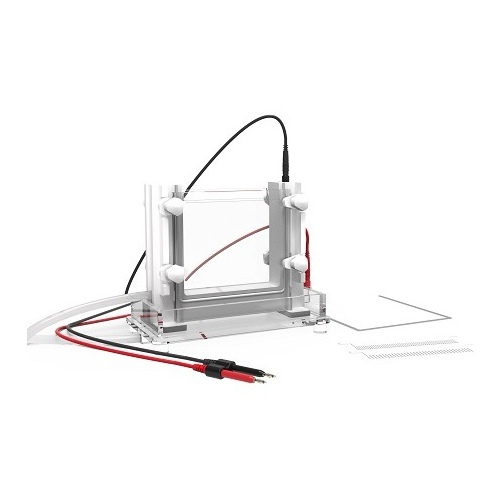
vertical electrophoresis cell for all kinds of protein gels
Vertical electrophoresis cell is a kind of core equipment used for protein electrophoretic separation in routine laboratory, which is suitable for SDS-PAGE and in-situ PAGE and other techniques.
Description
Vertical electrophoresis cell constructs electrophoresis channel by clamping polyacrylamide gel vertically between two glass plates, and then combines the upper and lower electrode system to apply electric field in the gel to realize high-resolution separation of protein molecules.
Features of Vertical Electrophoresis Cell
- Multi-functional Adaptation: Compatible with a variety of protein electrophoresis types, such as denaturing and non-denaturing electrophoresis, to meet the diversified needs of scientific research.
- High-strength glass plate: It adopts thickened glass plate with good bending strength and thermal stability, which is not easy to be damaged by repeated use.
- One-piece concave plate structure: the side strips and concave plate adopt one-piece molding design, which effectively simplifies the glue making process and improves the sealing.
- Professional sealing molds: Equipped with precise matching sealing racks and sealing components to avoid liquid leakage during the glue making process.
- Convenient liquid management system: Upper and lower electrophoresis cells are equipped with independent buffer liquid discharge ports, which makes it more convenient to remove residual liquid and avoid cross contamination.
Advantages
- sturdy structure, long service life: durable material with thickened glass plate, adapting to high-frequency experimental environment.
- more efficient operation: quick assembly design, with special molds can speed up the preparation of gel and sample.
- High resolution electrophoresis: the electric field passes through the gel vertically, the separation path is short and precise, suitable for the analysis of small difference proteins.
- Reduce sample waste: Good sealing performance, no leakage during gel preparation, avoiding waste of precious samples.
- convenient cleaning and maintenance: residual liquid can be quickly discharged, the whole cell is easy to disassemble and clean, saving time for daily maintenance.
Working Principle
Vertical electrophoresis cell holds the pre-made polyacrylamide gel through two parallel glass plates, so that it forms a separation channel in the vertical direction. When the upper and lower electrodes are energized, the negatively charged protein molecules will pass through the gel network structure from top to bottom under the action of electric field, and the proteins of different sizes migrate at different speeds, thus being gradually separated into clear bands. This system is usually used in conjunction with buffer and staining methods for imaging analysis.
The buffer system with separate upper and lower cells provides continuous and stable ion channels, and the electrodes build a complete circuit to ensure a stable and uniform distribution of the electric field during the electrophoresis process.
Application Fields
- Protein research: protein separation, purification detection, protein expression verification, etc.
- Biochemical analysis: enzyme activity research, protein interaction, modification detection.
- Medical and clinical research: screening and comparative analysis of disease-related protein markers.
- Agriculture and food testing: screening of genetically modified proteins, analysis of protein fractions in food.
- Teaching experiment: teaching electrophoresis principle and technology in college experimental courses.
- Pharmaceutical and biotechnology: protein structure research and separation analysis in new drug development.
Technical Parameters
| Model | EV20 |
|---|---|
| Glass plate size | 180x180mm |
| Gel size | 150x150mm |
| Gel thickness | 1.0mm |
| Number of comb teeth | 20, 34, or 50 teeth optional |