


 English
  Français
  Tiếng Việt
  Italiano
  Nederlands
  Türkçe
  Svenska
  Polski
  Română
  Latviešu
  한국어
한국어  Русский
  Español
  Deutsch
  Українська
  Português
  العربية
  Indonesian
  Čeština
  Suomi
Suomi  Eesti
Eesti  Български
  Dansk
Dansk  Lietuvių
  Bokmål
  Slovenčina
  Slovenščina
  Ελληνικά
  Magyar
  עברית
עברית 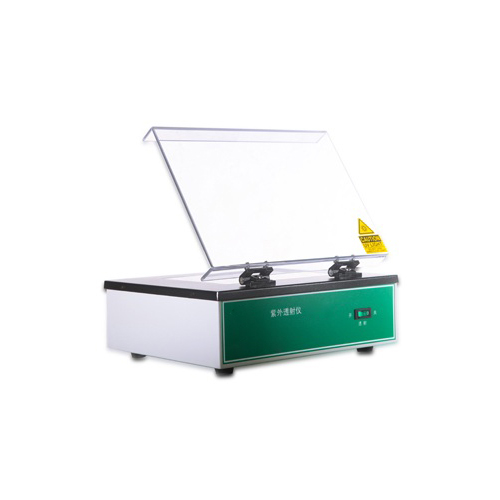
uv transilluminator for nucleic acid gel electrophoresis
UV transilluminator is a professional laboratory instrument used for imaging and processing of biological molecules, which is widely used in the observation of electrophoresis results of DNA, RNA and other nucleic acids, as well as the operation of cutting gel.
Description
UV transilluminator through a specific wavelength of ultraviolet light irradiation, so that the dye-labeled nucleic acids in the gel fluorescence, a clear display of the distribution of bands, to facilitate the researchers to locate, analyze and shear the purpose of the fragment.
Features of UV Transilluminator
- Adjustable protective screen design: equipped with a highly transparent UV shield, which can be opened and closed at multiple angles to ensure a clear observation field and effective protection against UV damage.
- high-quality filter glass platform: the workbench adopts UV filter glass material, which can effectively transmit specific wavelengths of UV light, such as 302nm or 365nm, filtering out stray light, and improving the imaging quality.
- Quartz UV lamp: equipped with high temperature resistant and long life quartz UV lamp, providing uniform and stable UV irradiation effect, suitable for long time observation and glue cutting.
- compact structure, convenient operation: the overall layout is reasonable, lightweight and flexible, easy to be placed in the electrophoresis work area.
- Suitable for nucleic acid gel electrophoresis result observation and cutting operation.
Advantages
- clear and recognizable imaging: high fluorescence signal intensity under UV excitation, clear band boundaries, easy to identify the target bands.
- Precise positioning of gel cutting: Gel cutting is performed directly through the direct-view observation window, avoiding band offset or wrong cutting.
- extensive dye compatibility: compatible with commonly used nucleic acid dyes, such as EB, SYBR Green, GelRed, etc., applicable to a variety of experimental conditions.
- enhance the safety of experiments: protective screen material to block most of the UV radiation, reducing the risk of eye and skin injury.
- low maintenance costs: quartz lamps are durable and resistant to aging, reducing the frequency of replacement, reducing laboratory operating costs.
Working Principle
UV Transilluminator works based on the principle of fluorescence excitation and emission. When a DNA strip embedded with a fluorescent dye in the gel after electrophoresis is exposed to UV light, usually at 302nm or 365nm, the dye molecules are excited to the excited state and release fluorescence as they rapidly return to the ground state, which can be picked up by the human eye or imaging equipment. The instrument provides directional UV irradiation through a dedicated filtering platform, and with a highly transparent protective screen to allow clear observation under the premise of protecting the user’s safety.
Application Areas
- molecular biology research: for PCR product analysis, restriction enzyme section identification, DNA cloning and other basic experiments.
- Genetic engineering: electrophoretic separation and cutting operation of target DNA fragments in the process of gene cloning and construction.
- Medical testing and genetic diagnosis: with nucleic acid extraction and PCR detection for pathogen identification, gene mutation screening and so on.
- Forensic medicine: paternity testing, STR band analysis, DNA fingerprint reading, etc.
- Teaching and scientific research training: colleges and universities and scientific research units for electrophoresis experimental teaching, demonstration and student practice.
Technical Parameters
| Model | E20 |
|---|---|
| Transmittance area | 200x150mm |
| Transmitted UV Light Source Wavelength | 302 nm |
| UV Lamp Power | 8W |
| Dimensions | 325x265x150mm |
| Weight | 4.6kg |